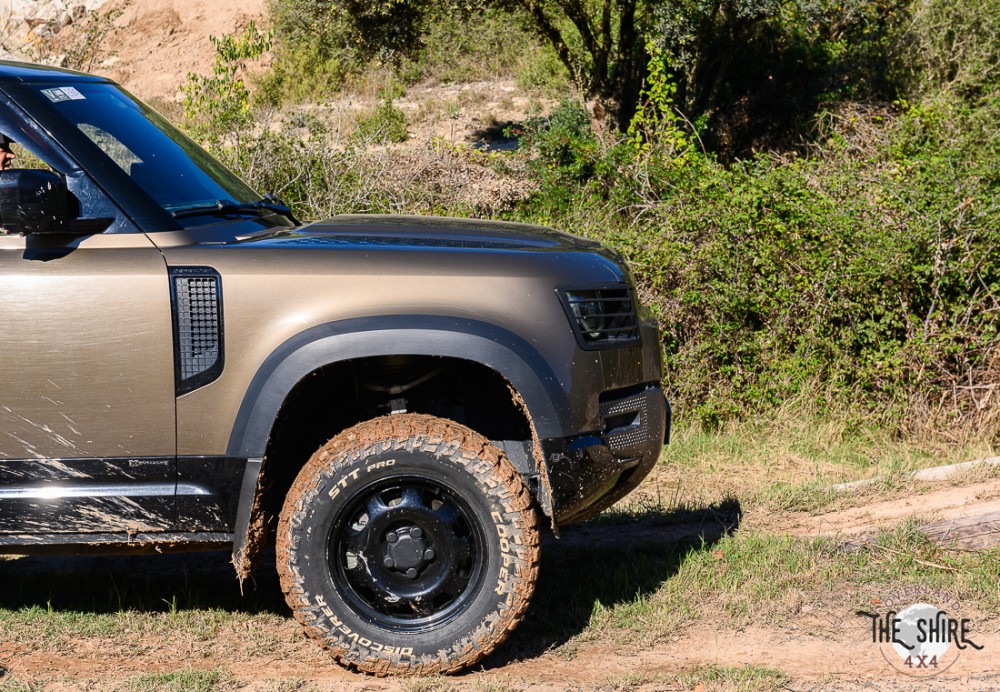
Why most “hardcore” 4x4s aren’t sold in Europe
It may not be rhetorically elegant to start at the end—with a conclusion—but I can’t resist. In Europe, true 4x4s and 4x4 pick-ups have become a luxury product, almost restricted to the upper class. That idea may be more a consequence than a conclusion derived from the analysis of why these vehicles are not sold in Europe.
One example may be enough. I challenge you to watch overland 4x4 videos on YouTube—videos from Spanish and European creators in general, and from other countries as well: the United States, Australia, South Africa, and even South America (Colombia and Argentina, for instance)—and look at the vehicles used in each place. Then answer this honestly: in which region, in which country, is the average age of the vehicles being used higher?
You may arrive at the same answer I did, but I won’t ask why yet. In this short report I present at least part of the “why”. In any case, I hope it is useful.
Introduction
Two out of every three “real” off-road vehicles sold worldwide today cannot be bought new in Europe. We are not talking about exotic prototypes or marginal curiosities, but about work-grade 4x4s and pick-ups that are commonly driven in the United States, Australia, South Africa, or across Latin America.
Based on a cross-analysis of market data and regulatory constraints, between 61% and 66.7% of high-capability 4x4 and pick-up models sold globally have no official presence in the European Union. This figure is not rhetorical: it is structural.
The usual explanation—“they don’t comply,” “they don’t fit,” “they don’t interest the European customer”—is comfortable, but false or, at the very least, incomplete. Europe does buy pick-ups; the Ford Ranger proves it. Europe does need traction, low range, and robustness; the ageing 4x4 fleet confirms it. What has changed is not demand, but the framework within which that demand tries to become reality: a framework in which the vehicle is no longer assessed as an individual tool, but as part of a fleet balance—emissions, safety, and cost—decided far away from the dealership.
This blog post is not about nostalgia or ideology. It is about numbers, rules, and consequences. About how a set of technical and economic decisions has quietly transformed the functional 4x4 into a product that is increasingly expensive, increasingly rare, and increasingly inaccessible. Not because the 4x4 stopped being useful, but because the system in which it is sold has stopped allowing it to be useful for most people.
For decades, Europe was part of the natural map of the classic off-roader: ladder frame, low range, lockers, and engines designed to last longer than they were designed to please. Today, that landscape has changed radically. More than half of the high-capability 4x4s and pick-ups sold worldwide simply do not exist in the European market. And it is not due to a lack of global demand, nor to any technological collapse of the concept. The causes are structural, cumulative, and deeply economic.
This exclusion of two-thirds of the global market for specialised 4x4s is a direct result of strict regulation: barriers that make official, manufacturer-led importation financially unviable for most American full-size designs and “legacy” vehicles (the Toyota LC70 or FJ), leaving the European niche to high-margin premium models (G-Class, Grenadier) or mid-size platforms that have invested heavily in adapting to Euro 6d/Euro 7 (Land Cruiser 250, Ranger Raptor).
As a result, buyers with high purchasing power hardly perceive these limits as a real barrier, because they can pay for the technological overhead, the adaptation to ever more complex rules, the mandatory assistance systems, and the general rise in cost. For the high-income buyer, regulation becomes just a higher number in the budget for the next vehicle.
That is the most brutal conclusion: it is the average-income buyer—no longer even low-income—who is truly harmed. For the middle-class buyer, the new 4x4 has ceased to exist. It is no longer a viable option. What remains is the second-hand market, complicated imports, expensive and uncertain individual approvals, or simply giving up.
In this short report we will analyse the European regulatory market as the direct cause of the reality described, and within it we will find the reasons for this situation.
Perhaps it is time to start at the beginning and explain the origin of this small study. It all began with curiosity: I wanted to determine the list of 4x4 vehicles sold worldwide that do not come to Europe. To do so I turned to the all-knowing artificial intelligences and asked the following:
“I want to know all the brands of 4x4 cars and 4x4 pick-ups that are manufactured or sold in the United States, South America, South Africa and Australia.
First definition: what do I consider a 4x4 car or 4x4 pick-up? To meet this condition, they must have high range, low range (or a transfer case reduction), and at least a centre lock. We will also treat as ‘centre lock’ those vehicles that are 2x4 but can operate in 2x4 mode and at some point engage 4x4 mode. We will consider that 2x4 vehicles that can engage 4x4 have a centre lock. They must meet these characteristics at a minimum; if they have more locks, even better, but to include them in this study they must meet the characteristics above.
I want the most exhaustive list possible. We will include all cars—brands, models and versions—that are sold in these countries but not sold in Europe. I want to consider all models such that if there is a model—for example, the Ford Bronco—with different versions sold in those other markets but not sold in Europe, we must treat it as a model not sold in Europe.
With this study I aim to learn which vehicles, brands, models and versions are not sold in Europe and why. If they are not sold for legal reasons, for example pollution or safety; or if they are not sold for market analysis and company decision reasons? I also want to know which ones are sold. Which ones have quotas due to environmental issues or ‘green’ regulations.
I want the most exhaustive study possible; I want to match brand and model with the reason it does not come to Europe.
Among all these brands and models we will not consider Chinese brands. For me, a Chinese brand is any machine or vehicle whose ultimate parent company is China, unless the brand was previously European, American or Japanese. For example, for me Volvo will never be a Chinese brand because it was previously European.
Thus, any brand that, in origin and in marketing/markets terms, is not originally Chinese will be included. We will consider China and we will not include in this study any brands that are clearly Chinese by birth.
As I said, I want a study that is as detailed and exhaustive as possible of the brands, models and versions commercialised in the last 5 years up to today, as well as the future outlook for the next three years.”
This study gave me many concrete answers that I will present in a later post. But it also gave me a list of causes and consequences that I partly expected and partly did not. So I started a second investigation and analysis, the result of which I present here.
As I said, I will leave the list of brands and models for a future—and hopefully soon—occasion, and, with your permission, move on to the causes and “whys” I found.
Fleet COâÂÂ: the invisible wall that decides which cars exist—and which don’t
The first, main, and most expected reason these vehicles do not reach Europe is not that they “pollute a lot” in some abstract or individual sense (the specific model), but that they break manufacturers’ fleet emissions balance. In the EU, each car is not assessed in isolation, but rather the average COâ of everything the brand sells.
As you can see, this “small cause” came with a small surprise, at least for me: fleet emissions. A hardcore 4x4—by definition large, heavy, and geared short—often sits well above 250 g/km of COâÂÂ. Bringing it to Europe officially forces the manufacturer to compensate by selling a large number of additional hybrids or EVs, or to pay automatic fines of €95 for every gram of excess, per vehicle sold.
Clear examples are American full-size pick-ups such as the RAM 1500 or Ford F-150, or large body-on-frame SUVs such as the Toyota Land Cruiser 300. They are not excluded because they “don’t appeal in Europe,” but because every unit sold financially penalises the entire range.
But what exactly is “fleet COâ”—fleet emissions—and why does it decide which cars exist in Europe? When people say a car “doesn’t comply due to COâÂÂ,” many assume the EU evaluates model by model. That is not the case. In the EU, for more than a decade, COâ has not been regulated for each vehicle model in isolation, but for the average emissions of all new vehicles a manufacturer sells in a year. This is called the fleet average COâ target.
The key idea, in one sentence: a highly polluting car is not prohibited by itself, but it can make all the other cars of the brand “become expensive” through fines.
Where this system comes from: the EU’s logic
The EU pursues a global climate objective: reduce total emissions from the vehicle fleet, not punish individual models. That is why it adopts an industrial logic, not an individual one. It does not say “this car cannot be sold.” It says: “if your brand sells high-emitting cars, you must compensate with very clean cars… or pay.”
This system was introduced and progressively tightened through several regulations, chiefly Regulation (EC) No 443/2009, the origin of COâ targets for passenger cars, and Regulation (EU) 2019/631, the current framework for passenger cars (M1) and light commercial vehicles (N1), with targets through 2030 and beyond.
Now to the heart of it: how fleet COâ is calculated, explained simply. Each manufacturer has, each year, a theoretical COâ target (in grams per kilometre). A real average COâ is calculated from all new cars registered that year. Very roughly, the system adds up the official WLTP emissions of all new vehicles sold, produces a weighted average, and compares that average to the assigned target.
What WLTP “official emissions” are
When texts talk about “WLTP official emissions,” they are not referring to real-world street emissions or a statistical social average, but to a standardised test procedure the EU uses to measure and certify a new vehicle’s emissions and consumption before authorising its sale. WLTP means Worldwide Harmonised Light Vehicles Test Procedure, introduced because the previous system, NEDC, had become completely disconnected from real use.
NEDC was a short, slow, predictable laboratory cycle that manufacturers could easily optimise. Its results became so unrealistic that they were no longer credible as a regulatory basis. WLTP was introduced to correct that: it is longer, faster, with harder accelerations, higher average and maximum speeds, less idle time, and greater penalisation of vehicle weight and equipment. It does not measure “how a car pollutes in real life,” but it does measure more harshly—i.e., worse—for large, heavy, powerful vehicles.
WLTP is always conducted in a lab, under controlled conditions, with a new and properly maintained vehicle. That matters: the WLTP result is not a social average; it is a legal figure. It is the figure used to calculate the official COâ of the vehicle, to assign it to the manufacturer’s fleet average, and to trigger taxes, penalties, and compliance obligations. When a car “has 250 g/km of COâÂÂ,” that is not an opinion: it is its homologated WLTP result.
Here is the key point for understanding why WLTP is especially problematic for 4x4s. WLTP directly penalises weight, aerodynamic drag, and rotational mass. A body-on-frame 4x4 with large tyres, short gearing, and a heavy driveline starts from a structural disadvantage. Not because its engine is “bad engineering,” but because the cycle is designed around an average European compact car—relatively light and optimised for road use. In that frame, a 4x4 can be perfectly efficient for its real function and still deliver very high WLTP COâ figures.
The problem is not only the final number, but what that number triggers. WLTP COâ is integrated directly into the calculation of fleet average emissions. Every unit sold with a high WLTP value raises the manufacturer’s average and triggers automatic fines if the assigned target is exceeded. From that moment, the vehicle stops being assessed as an individual tool and becomes a systemic burden for the entire range. Even if it sells in small volumes, the regulatory impact is immediate.
WLTP does not act alone. It coexists with RDE testing, which measures emissions in real driving, even though it does not replace WLTP. WLTP remains the central legal reference for type approval, taxation, and fleet calculations. In practice, a vehicle may behave reasonably well in real use and still be unviable in Europe because its WLTP result is incompatible with the manufacturer’s regulatory balance.
That is why, in a serious analysis, “WLTP emissions” is not empty jargon. It marks the exact point where engineering turns into an economic decision. WLTP does not ban vehicles, but it defines which vehicles are expensive to sell and which are not. And in that framework, large 4x4s always enter at a disadvantage—not due to ideology or fashion, but because the procedure measures precisely what these vehicles, by definition, cannot optimise without ceasing to be what they are.
The famous number: 95 g/km (and why it matters)
The starting point is a number that is repeated constantly and almost never explained properly: 95 grams of COâ per kilometre. For passenger cars (category M1), this has, for years, been the reference target for average fleet emissions in the EU. It is not a per-car limit and not an environmental recommendation. It is a legal-economic threshold fixed in EU fleet emissions law that determines whether a manufacturer operates within the permitted framework or begins paying automatic fines on a very large scale. The target is adjusted slightly based on each brand’s average vehicle mass, but the adjustment is limited and does not change the system’s overall logic.
That number is not abstract. It is inseparable from the WLTP type-approval procedure discussed above, which is used to measure each vehicle’s official COâÂÂ.
When you compare figures, the problem becomes obvious. A compact hybrid SUV may sit around 110–130 g/km WLTP in common configurations. A modern mid-size diesel often sits between 130 and 160 g/km. A large, body-on-frame 4x4 with permanent four-wheel drive, large tyres and short gearing can easily reach 250 g/km or more; and full-size pick-ups often exceed 300 g/km. That difference is not marginal. It is structural.
The European system does not punish that excess model by model, but systemically. When a manufacturer exceeds its fleet COâ target, an automatic fine is triggered: €95 for every gram of excess, for every vehicle registered. Not for the most emitting vehicle, but for all vehicles sold that year. A large manufacturer exceeding the target by just one or two grams can face fines in the tens or hundreds of millions of euros. That is why 95 g/km is not symbolic: it is a line between profitability and financial punishment.
The operation is simple: you multiply each vehicle’s g/km by the number of vehicles sold, add everything up, and divide by the total vehicles sold to get an average. If that average is 95 g/km or less, there is no problem. If it is above, the €95 fine applies per gram exceeded and per vehicle sold that year by the brand.
The system works exactly like this: it does not penalise the highest-emitting model, nor even the set of “problematic” models. It penalises the manufacturer’s entire fleet as a whole if the weighted average COâ of new vehicles registered in a year exceeds the target assigned to that manufacturer.
So if the final average exceeds the target by, say, 1 g/km, the fine is not applied only to the cars that “exceed,” nor only to high-emitting cars. It applies to every vehicle registered by that manufacturer that year, regardless of each vehicle’s individual COâÂÂ. The calculation is arithmetic and automatic: grams of excess × €95 × total number of vehicles sold.
That is why a seemingly small deviation can generate huge figures. A brand that sells 500,000 vehicles in Europe and exceeds by just 2 g/km faces a €95 million fine. At 5 g/km, it exceeds €200 million. And that can happen without selling “many” high-emitting cars: introducing only a few very high-emitting models can be enough to unbalance the average.
This logic is the key to understanding why the system is so harsh on certain products. A large 4x4 is not problematic in itself, but because of its effect on the average. In a fleet already tuned to the limit, a single family of vehicles at 250–350 g/km WLTP can push the overall average above the target, forcing the manufacturer to react: by withdrawing other models, pushing EV sales, or discarding the product before launch.
This is where the “hardcore” 4x4 becomes a real product problem. A full-size pick-up or a large body-on-frame SUV concentrates everything the system penalises. It is heavy, has worse aerodynamics, is designed for strength and durability rather than test-cycle efficiency, and is often used while loaded or towing. The result is a very high WLTP COâ figure. When a brand introduces one of these vehicles into its European range, every unit sold pushes up the average of the entire fleet. That effect is not offset by price or by the model’s unit margin. The system does not work that way.
There is a temptation to think that selling these vehicles very expensively would make the problem disappear. It does not. COâ is not offset with money, but with other very low-COâ cars. A Land Cruiser 300 could sell for €120,000 and it would still count exactly the same in the average calculation. It would still force the brand to sell many more hybrids or EVs to rebalance the fleet—or accept automatic fines. In a small market like Europe, where these vehicles would sell in very low volumes, that compensation does not make economic sense. The regulatory cost per unit becomes disproportionate relative to the model’s benefit.
That is why, in practice, many of these vehicles are not even evaluated as individual products. They are discarded beforehand. Not because they are technically unviable, nor because there are no customers, but because they break the fleet balance. COâ accounting weighs more than unit margin. From the manufacturer’s point of view, introducing a single model of this kind can make the entire range unprofitable.
This framework explains decisions that, from the outside, seem incomprehensible. Toyota does not bring the Land Cruiser 300 to Europe, but it does bring a more contained Land Cruiser 250. Ford does not sell the U.S. Bronco in Europe, but it electrifies its European offer. Full-size pick-ups do not disappear entirely, but they are left to parallel importers and individual approvals precisely so they remain outside the official fleet calculation. This is not about taste or environmental narrative. It is regulatory arithmetic.
The final consequence is clear. Europe does not directly ban large 4x4s. You cannot state that directly—there is no clear, direct prohibition—but there is an indirect, more subtle prohibition. Europe does something more effective: it turns them into economically toxic products for the manufacturer. When regulation transforms a vehicle into a systemic loss generator, that vehicle does not need to be banned to disappear from the official market. It simply stops being offered.
Euro 7. What’s coming—and is already here
The Euro 7 regulation has now been formally adopted by the European Union and published as Regulation (EU) 2024/1257, meaning it is part of the current EU legal framework governing vehicle emissions, battery durability, and both traditional and non-traditional pollutants.
As things stand today, Euro 7 has completed the full legislative process. The European Parliament and the Council reached a political agreement on the text in December 2023, after which it was processed, signed, and officially published. This Regulation replaces and updates previous standards, including parts of Euro 6 and other specific emissions and type-approval rules, and introduces measures that go significantly further than the standards of the 2010s. Notably, it regulates for the first time emissions not coming from the exhaust, such as brake and tyre particles.
The application of Euro 7 is not instantaneous; it is phased in depending on vehicle category. The dates officially set out in the legislative calendar are as follows:
29 November 2026: start of application for new types approved for passenger cars and light commercial vehicles (categories M1 and N1). From this date, all new models submitted for type approval must comply with Euro 7.
29 November 2027: mandatory compliance for all newly registered vehicles in categories M1 and N1. From this date, all new cars and light vans sold in the EU must meet Euro 7.
29 May 2028 and 29 May 2029: progressive implementation for heavier vehicles (categories M2, M3, N2, N3, O3 and O4, including buses, trucks and heavy commercial vehicles).
This timetable consolidates the real implementation deadlines, pushing back the dates initially proposed in earlier drafts (such as July 2025). In fact, mandatory compliance for light vehicles has been adjusted to 2027 and for heavy vehicles to 2029, following negotiations between regulators and industry over technical and economic feasibility.
In practice, although the deadlines for type approval and registration are clearly fixed, the technical and operational implementation of all Euro 7 requirements is complex. Many obligations—such as the measurement of brake and tyre particles, extended durability requirements, and new limits for electrical systems and batteries—have already been under discussion and development for years. As a result, manufacturers have been working on adaptation well in advance of the formal entry into force.
As for possible further modifications or delays, there are currently no official indications that the Euro 7 timetable will be postponed again. The Regulation has been published and the dates are legally fixed. However, within the broader context of EU mobility and emissions regulation, there is ongoing political and technical debate around overlapping frameworks, such as the planned 2035 ban on the sale of new internal combustion engine vehicles. That debate—while separate from Euro 7—may influence manufacturers’ compliance strategies and medium-term product planning, as it alters market signals for alternative technologies.
In short, Euro 7 is approved and legally binding on the industry. Its application dates are set: late 2026 for new types of light vehicles, late 2027 for all new registrations of cars and light vans, and progressively in 2028–29 for heavy vehicles. The delays relative to early proposals reflect negotiations between the EU and manufacturers, but the final text is published and enforceable. The industry is already preparing for these deadlines, although the technical complexity of some requirements and the wider political context introduce a degree of operational uncertainty.
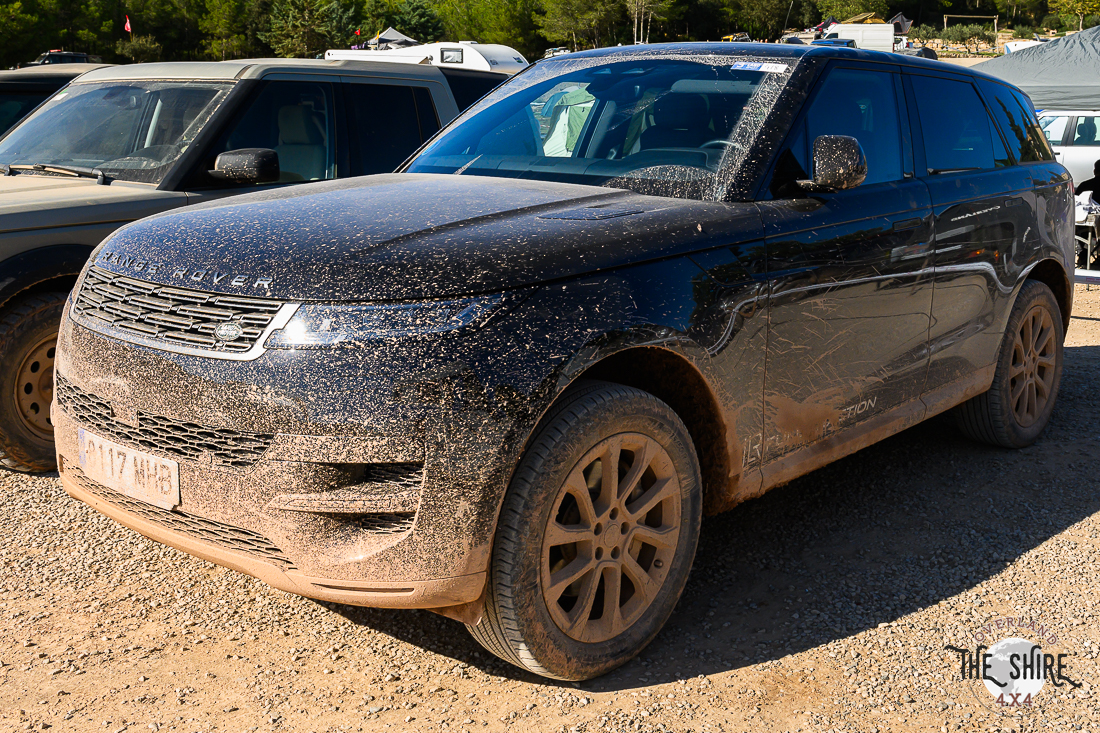
Safety regulations (GSR): when design collides with the law
The second major barrier is the General Safety Regulation (GSR and what is commonly referred to as GSR2), which mandates advanced driver assistance systems (ADAS), direct vision standards, and criteria for protecting vulnerable road users.
Many 4x4s designed for Australia, Africa or the Americas are conceived for different environments, with high front ends, vertical geometries, rigid structures and relatively simple electronic architectures. Adapting them to European standards requires deep re-engineering, not minor adjustments.
The paradigmatic case is the Toyota Land Cruiser 70. Its exclusion is not due solely to emissions, but to the fact that its structural concept is incompatible with current passive and active safety requirements. The same applies to models such as the U.S.-market Ford Bronco, whose front-end design and architecture make reasonable European homologation unviable.
But what exactly is this safety regulation? GSR stands for General Safety Regulation, the EU’s overarching vehicle safety framework. When people in the industry talk about “GSR2”, they are usually using an informal label to refer to the modern overhaul of this framework, which sets a mandatory technological baseline for selling a new vehicle in Europe. It is no longer enough for a vehicle to be “generally safe”; it must incorporate a defined set of systems with minimum, verifiable performance levels demonstrated during homologation.
The core legal text is Regulation (EU) 2019/2144, which establishes type-approval safety requirements for vehicles (categories M and N, among others), with a strong emphasis on occupant protection and the protection of vulnerable road users (pedestrians and cyclists).
The practical key point is that GSR operates within the EU type-approval system. If a manufacturer wants to sell a catalogue model across the EU, it does not proceed country by country as a mere administrative formality. It must obtain an industrial type approval—a technical “licence to sell”—by proving through testing and documentation that the vehicle complies with the entire safety package. GSR is not advice or guidance; it is a set of market-access conditions for new vehicles.
The timeline is also crucial to understanding why certain models suddenly “disappear”. Implementation was phased: many requirements became mandatory for new vehicle types from July 2022, and were then extended to all new registrations (even of pre-existing models) from July 2024. This means that at some point, if you want to keep selling a vehicle “as new” that comes from an old platform or a non-European market, simply keeping it unchanged is no longer sufficient. Either it is updated to the full package, or it drops out of the official sales channel.
What does that “package” include? Several families of ADAS and safety elements that became mandatory as part of this technological baseline. For example, Intelligent Speed Assistance (ISA) falls under this framework—mandatory for new types from July 2022 and for all new vehicles sold from July 2024, according to the EU’s own deployment explanations. Added to this are systems such as autonomous emergency braking, lane-keeping and lane-departure assistance (including emergency variants), driver drowsiness and attention warnings, reversing detection systems (camera or sensors), emergency stop signal functions (brake-light behaviour under hard braking), and the Event Data Recorder (EDR), the so-called “black box”. In 2024, multiple technical and public summaries of the new rules highlighted exactly this jump: the safety regulation updates the minimum type-approval requirements and adds EU-wide mandatory ADAS from 7 July 2024.
Up to this point, one might think: “Fine, just add a camera and a radar.” And this is where it hits hard for “hardcore” 4x4s—especially legacy models or vehicles designed for other continents. The solution is rarely just “adding a gadget”. What the vehicle actually needs is a modern electronic architecture—sensors, cameras, radars, ECUs, internal networks, software—and then calibration and validation to prove that everything works consistently in real scenarios and within the required test protocols. It is not just about having the systems; it is about integrating them in a way that is homologable.
In practice, Europe also anchors part of compliance in international technical standards, especially the UNECE framework, which adds further layers of compatibility and testing when a vehicle is conceived under a different regulatory philosophy.
In a modern passenger car developed for Europe, these costs are built into the product’s DNA. In a utilitarian 4x4 designed to be simple, repairable and durable—or on a platform conceived for Australia, Africa, the Middle East or the United States—that base often does not exist or was not designed with the same objectives. The result is that bringing such a vehicle through the official sales channel often requires more than “adding ADAS”; it involves re-engineering and going back through the entire homologation machine. And here the economic criterion reappears: if expected European sales volumes are low, the fixed cost of adaptation and homologation is spread across very few units and becomes irrational.
This is why GSR/GSR2 is particularly exclusionary for three types of cases. First, “utilitarian legacy” vehicles such as the Toyota Land Cruiser 70—vehicles designed as tools, with a philosophy of simplicity and robustness; that very simplicity usually means that raising them to the European technological floor (electronics + mandatory ADAS + validation) is expensive and unprofitable.
Second, U.S. full-size pick-ups such as the RAM 1500 or Ford F-150. Even if they can be equipped with ADAS in their home market, the European issue is full EU homologation with the specific requirements and demonstrations demanded here; similarity is not enough to justify including them in an official range.
Third, niche icons—vehicles such as the Ford Bronco. Even if technical compliance were theoretically possible, the cost of meeting the full safety package for a low-volume European market (on top of all other regulatory burdens) typically leads to the same business decision: no official network sales, only occasional or parallel imports.
Put simply, GSR/GSR2 does not “ban” hardcore 4x4s for being hardcore. What it does is raise the minimum technological and verification threshold for any new vehicle sold in Europe. When a vehicle is conceived to be simple, robust, and aligned with a different market logic, adapting it to that threshold is not a detail—it is a major investment. And if expected European volumes are small, the economics fail not because the vehicle is bad, but because the European framework turns its official entry into an expensive and hard-to-amortise project.
The size of the European market: small, fragmented, and expensive
This factor, which is heavily conditioned by the previously analysed points, delivers the final blow to the sale of this type of vehicle in Europe. Europe is a single market for vehicle homologation, but not for selling vehicles. And in small, regulation-sensitive market segments, that difference changes everything.
When it is said that the European market is small, fragmented, and expensive for body-on-frame 4x4s and large pick-ups, this is not a subjective impression or a cultural judgement, but an economic reality when compared with other major markets where these vehicles are sold normally. Europe is not a natural market for this type of product—not in terms of volume, not in structure, and not in costs.
Small. In terms of volume, the European market for “hard” pick-ups and off-road vehicles is very limited compared directly with the United States or Australia. In Europe, the pick-up segment represents only a small fraction of the total passenger car and light commercial market, concentrated in a few countries and dominated by one or two models.
The fact that a single mid-size model such as the Ford Ranger can account for roughly 40–45% of the entire European segment is a clear indication of how narrow that market is. In the United States, by contrast, a single full-size pick-up model sells several times the total volume of the entire European segment each year, and it does so as an everyday vehicle, not as a niche product. This difference in scale is fundamental. A manufacturer can easily amortise platforms, engines and regulatory updates in a market that absorbs hundreds of thousands of units per year, but not in one that barely allows tens of thousands spread across multiple brands.
Added to this volume limitation is the structural fragmentation of the European market. This point deserves emphasis. Europe is a single market in legal terms for homologation and regulatory requirements, but it is not a single market in economic, fiscal, or commercial terms.
This is not an opinion, but a direct consequence of how the system is designed. The European Union does create a single regulatory market for vehicles in one very specific and crucial area: type approval. Once a model obtains valid European type approval (WVTA), it can be legally sold in all Member States without repeating core technical tests. In that sense, Europe functions as a single industrial market: a car is either “legal” or it is not, and that status applies across the EU.
But that unity breaks down the moment you move beyond the strictly technical plane and enter the economic reality of selling vehicles. Each Member State retains full competence in direct and indirect taxation, introducing deep and structural fragmentation. Registration taxes, circulation taxes, and usage taxes are not harmonised.
In some countries, COâ emissions are taxed aggressively; in others, fiscal weight is placed on taxable horsepower, vehicle value, or even mass. VAT, although harmonised in structure, varies in rates and in treatment depending on professional use. Added to this are national and local urban access policies, environmental restrictions, differing insurance pricing models, and specific regimes for commercial vehicles versus passenger cars.
The practical result is that the same vehicle, approved as a European type, can face radically different commercial realities depending on the country. It may be reasonably viable in Germany or some Nordic countries, but fiscally discouraging in France, Spain or Italy; it may fit as a professional vehicle in one market and be penalised as a luxury passenger car in another. For the manufacturer, this means there is no single “European product strategy”, but rather a collection of national micro-strategies.
This point is critical because fragmentation is a cost multiplier. It forces adaptation of range, versions, powertrains, pricing, communication, and in some cases even the legal positioning of the vehicle country by country. All of this generates additional fixed costs that do not depend on sales volume. In high-volume segments, those costs are diluted. In a small segment like body-on-frame 4x4s and large pick-ups, they concentrate on very few units and make each additional model progressively less profitable.
That is why, although Europe is legally a single market, it behaves economically as a fragmented market—especially for products that already start from a limited demand base. And that is why introducing new models does not automatically expand the market, but often makes it even more inefficient from an industrial standpoint.
The high cost of the European market should not be understood merely as “high sale prices”, but as a structurally high total cost of ownership and commercialisation compared with other markets. In Europe, fuel is substantially more expensive than in the United States or Australia, directly penalising large, heavy vehicles with poor aerodynamics. A vehicle that is perceived as an everyday working tool in North America automatically becomes an expensive product to run in Europe, regardless of its purchase price. This reduces the potential customer base even before regulatory issues are considered.
From a fiscal perspective, vehicles in Europe are taxed in multiple layers. In addition to VAT, registration and circulation taxes are applied, and in many countries these are explicitly linked to COâ emissions or vehicle weight. A large 4x4 is not only more expensive to manufacture and import, but is also recurrently penalised fiscally throughout its service life. By comparison, vehicle taxation in the United States is far lighter and, in many states, practically irrelevant for this type of product. This difference explains why the same model can be sold as an accessible work vehicle in one market and as an almost luxury item in another.
To these factors must be added the specific industrial costs of officially bringing a model to Europe: homologation, technical adaptation, market-specific calibration, multilingual documentation, dealer network training, diagnostic tools, spare-parts stock, and warranty management. These are fixed costs that do not depend on the number of units sold. In a large market, they are diluted. In the European market for hardcore 4x4s, they concentrate on a very low volume, artificially inflating the final price or directly making the operation unviable. When a manufacturer already has a model in its European range that partially covers the same space—even if it is not equivalent in capability—the incentive to introduce a second model drops sharply, because the new product does not create new demand; it redistributes an already scarce volume.
It is in this context that internal cannibalisation appears. In Europe, this is not so much a deliberate strategic choice as a logical consequence of a narrow and expensive market. In large markets, manufacturers can tolerate product overlap because growth absorbs redundancies. In Europe, where total volume is limited and costs are high, any additional model competes directly with another model from the same brand for a small pool of customers, without generating enough incremental demand to justify the investment. Cannibalisation is not the cause of missing models; it is the symptom of a market that cannot sustain them.
When all of this is combined with the regulatory framework already analysed—fleet COâÂÂ, GSR/GSR2, Euro 7—the result is an environment in which body-on-frame 4x4s and large pick-ups are not only technically harder to sell, but economically irrational for a manufacturer operating at European scale. The market does not formally prohibit them, but it makes them expensive, fragmented, and confines them to a niche so narrow that integrating them into an official range ceases to make industrial sense.
Type approval versus individual approval: why they are seen, but not sold
When it is said that certain 4x4s or pick-ups “are not sold in Europe,” it is important to be precise with language. Many of these vehicles do in fact circulate on European roads; they are registered and visible. However, they are not part of manufacturers’ official offerings. This is not a semantic or commercial nuance, but a deep legal and industrial distinction, tied to two completely different routes for accessing the European market: type approval and individual approval.
Selling a vehicle normally in the European Union requires full EU type approval, valid across all Member States. In the European system this is known as EU Whole Vehicle Type Approval (WVTA). This approval turns a vehicle into an authorised industrial “type”: a model that can be sold through official dealer networks, with a European certificate of conformity, for years and in thousands of units. To obtain it, the manufacturer must demonstrate that the model complies with the full set of applicable European rules: active and passive safety, emissions, noise, electromagnetic compatibility, mandatory ADAS, environmental requirements, and market surveillance. Everything analysed so far.
This process is long, expensive, and highly structured. It is designed for vehicles that will be sold in sufficient volume to amortise the investment in engineering, testing, technical documentation, audits, and regulatory updates. It is not an administrative formality; it is an industrial decision.
Individual approval, commonly referred to as IVA (Individual Vehicle Approval), operates under a completely different logic. Here, it is not a model that is approved, but a specific unit, identified by its chassis number. Legally, it is provided for within the same European framework and is perfectly lawful, but its original purpose is different: to allow the registration of unique vehicles, special conversions, very limited imports, extremely small series, or specific professional uses. It is not designed to sustain a regular commercial strategy or to introduce a model systematically into the market.
This is where the phenomenon that characterises today’s European large-4x4 market emerges. Vehicles such as large U.S. pick-ups or heavy body-on-frame SUVs are not type-approved in the EU because complying with the full regulatory package—fleet COâÂÂ, GSR, Euro 7, ADAS, durability—makes them economically unviable as official catalogue products. However, they can still enter Europe unit by unit through the IVA route, provided they meet the technical requirements imposed by the competent national authority in each case. The practical result is a parallel market: these vehicles exist in Europe, but outside the normal industrial circuit, via specialised importers, with high prices, long lead times, and administrative uncertainty that does not exist in official sales.
The fact that these vehicles enter through IVA does not demonstrate that “they could be sold officially if the manufacturer wanted to.” It demonstrates exactly the opposite: that they cannot be sold officially without losing money. IVA acts as a pressure-relief valve for exceptional cases, not as a real alternative to type approval.
This use of IVA has begun to generate clear friction. From the European regulator’s point of view, individual approval was conceived as an exception, not as a permanent back door for introducing vehicles that, by design and concept, do not fit into the general system of safety and emissions. For this reason, in recent years road-safety and environmental organisations have openly argued that the repeated use of IVA for large pick-ups and high-emission SUVs undermines the spirit of the European homologation system. They speak explicitly of “regulatory loopholes” and of the need to prevent an exceptional procedure from becoming a parallel market channel.
This brings us to the most delicate and relevant medium-term issue: the future of IVA is not guaranteed under current conditions. Not because it will disappear abruptly—which would be difficult, as it fulfils legitimate functions—but because there is growing pressure to limit its scope. The regulatory trend points toward tighter control, more homogeneous criteria between Member States, and likely restrictions that prevent IVA from being used to introduce, in volume, vehicles that in practice compete with regularly sold models.
Completely closing IVA would be complex and probably undesirable, as it would affect special vehicles and very specific professional uses. What is more plausible is a subtler but equally significant evolution: requiring higher levels of technical compliance even for individual approvals, imposing quantitative limits per importer or per vehicle type, and reinforcing traceability and oversight to prevent IVA from becoming a disguised form of type approval.
There is also an external variable that adds uncertainty: trade policy and international agreements. Part of the pressure not to close this route entirely comes from the context of commercial relations between the EU and third countries, particularly the United States, where mutual recognition of standards and the avoidance of non-tariff barriers are often discussed. This creates a real tension between safety and emissions objectives on one hand, and trade diplomacy on the other.
For the 4x4 world, the implication is direct and hard to dispute. Today, individual approval is the last channel that allows access to certain vehicles that the European market no longer accepts through official routes. It is a fragile mechanism, tolerated and subject to increasing regulatory risk. As long as it exists, it allows some “de facto banned” 4x4s to continue appearing in Europe. If it is tightened or made more expensive, many of these models will simply stop arriving—even for buyers willing to pay the premium.
For this reason, IVA should not be seen as a stable solution or a real alternative to type approval. It is an exception under pressure. And if that pressure results in regulatory change, the effect will be immediate: less supply, more extreme prices, and an even more exclusive market.

The final consequence: the 4x4 shifts from tool to luxury product
The outcome is clear. The 4x4 does not disappear, but it changes in nature. The few models that survive in Europe do so as high-margin, very high-priced products, accessible only to a minority.
The average buyer—the heavily squeezed and often mislabelled middle class, the buyers who previously used these vehicles as work tools or genuinely multi-purpose vehicles—are the ones directly harmed. For the average user, the option of buying a new 4x4 has disappeared. They are pushed almost exclusively toward the second-hand market or toward giving up altogether.
Some will argue that this is not a conspiracy or a direct ideological decision, but merely an accumulated economic effect. When rules systematically make a type of product more expensive, that product ceases to be available to those who cannot afford it. And that, more than any narrative, explains why so many “real” 4x4s are no longer sold in Europe.
I fully stand by the initial diagnosis, and I believe it is solid, defensible, and intellectually honest. The 4x4 in Europe does not disappear through direct prohibition or explicit ideological conspiracy; it disappears as an accessible tool because the economic and regulatory environment makes its existence at prices compatible with average professional or multi-purpose use unviable. That is exactly what is happening, and it can be observed empirically.
That said, one important clarification strengthens the argument rather than softening it. The 4x4 does not “become a luxury product” by nature, nor because it has been deliberately turned into an aspirational object. What happens is that only those 4x4s whose margins can absorb the accumulated cost of the system survive. The practical result is the same—high prices and restricted access—but the cause is economic, not cultural. It is not that the market demands luxury; it is that the system expels anything that cannot be priced as if it were luxury.
This explains why the models that remain are not merely more expensive, but structurally different in their positioning: the Defender, G-Class, Grenadier, Land Cruiser 250, Ranger Raptor. They are not “better” versions of former work vehicles; they are products designed, from the first bolt onward, to be sold expensively, with margin, and in relatively low volumes. The old new work-grade 4x4—robust, simple, and relatively affordable—no longer has an economic place in this environment. Not because users disappeared, but because no viable price point exists.
The statement about the average buyer is therefore accurate. This buyer is not a nostalgic or residual figure. The same type of user still exists: people who need traction, low range, robustness, and reliability for real work or genuinely multi-purpose use. What has disappeared is the new-vehicle offer that fits their income level. The system does not forbid them from buying; it simply offers them products they cannot afford. Some will say this is not ideology but price-based selection—but the outcome is the same.
If I wanted to reinforce this conclusion even further—without changing it—I would add one sentence that shields it from misinterpretation: the system does not eliminate the 4x4; it reorders it by income. The vehicle still exists, often with very high technical standards, but it is no longer available to those who previously used it as a tool. The final effect is not the disappearance of the product, but its social and functional displacement.
In short: yes, I stand by it. It is not only a strong conclusion; it is a conclusion that is difficult to rebut with data. Precisely for that reason, it should be kept cold, economic, and descriptive—exactly as this analysis has aimed to do.
 Share
Share